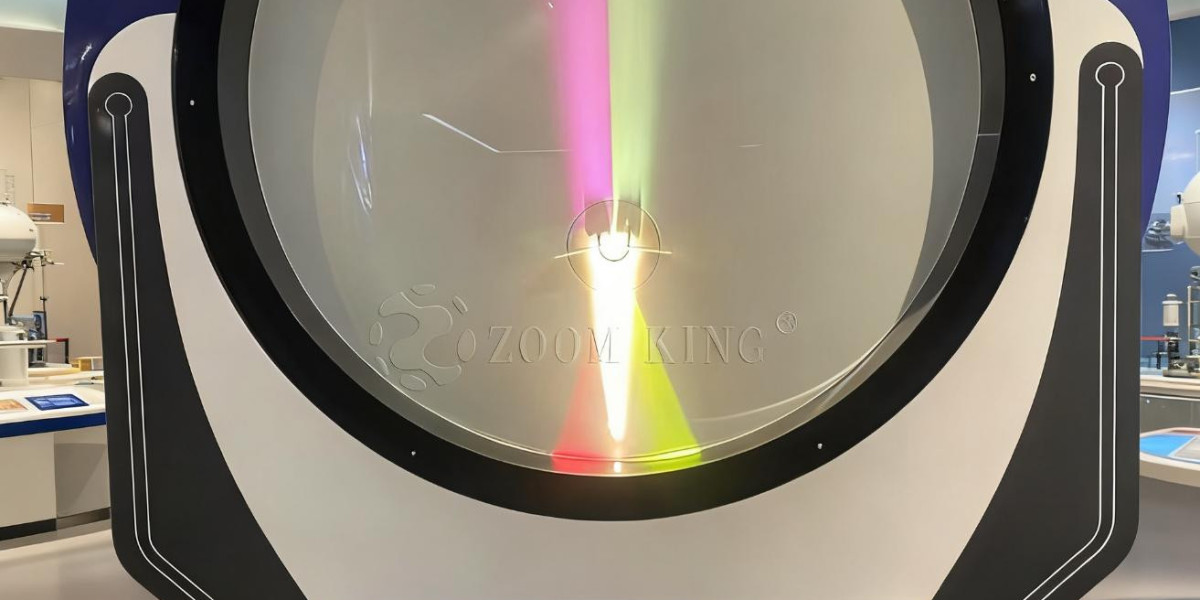

Over the past few years, one clear trend has emerged in science museums: visitors no longer want to just observe exhibits—they want to step inside them. This shift is one reason immersive light and optics exhibits are gaining attention again.
Light is a perfect medium for immersive experiences. With mirrors, projection, and dynamic lighting, museums can transform simple scientific concepts into environments visitors can walk through and interact with.
For example, a walk-in kaleidoscope exhibit allows visitors to stand inside a chamber surrounded by mirrored reflections and rotating patterns. As people move, the shapes and colors change instantly. The experience feels artistic, but it is also a demonstration of optical reflection and symmetry.
Another common format is the light path experiment station, where visitors can control mirrors, lenses, or prisms to guide a laser beam through different paths. These interactive setups make concepts like reflection, refraction, and dispersion easy to understand without long explanations.
Immersive Exhibit | Visitor Experience | Science Topic |
Mirror room installation | Endless reflections and spatial illusions | Reflection |
Prism light wall | Split white light into colors | Spectrum & dispersion |
Laser path experiment | Visitors redirect beams using mirrors | Reflection & refraction |
Immersive optics exhibits also fit well with today’s STEM education goals. Instead of passively reading panels, visitors learn by experimenting, adjusting components, and observing results in real time.
Suppliers such as QingChuang have developed a range of interactive light and optics exhibits for science museums, including immersive mirror installations and hands-on optical experiment stations. These systems are designed for high visitor traffic and long-term educational use.
As museums continue to focus on experience-driven learning, light-based installations are likely to become an essential part of future science galleries.