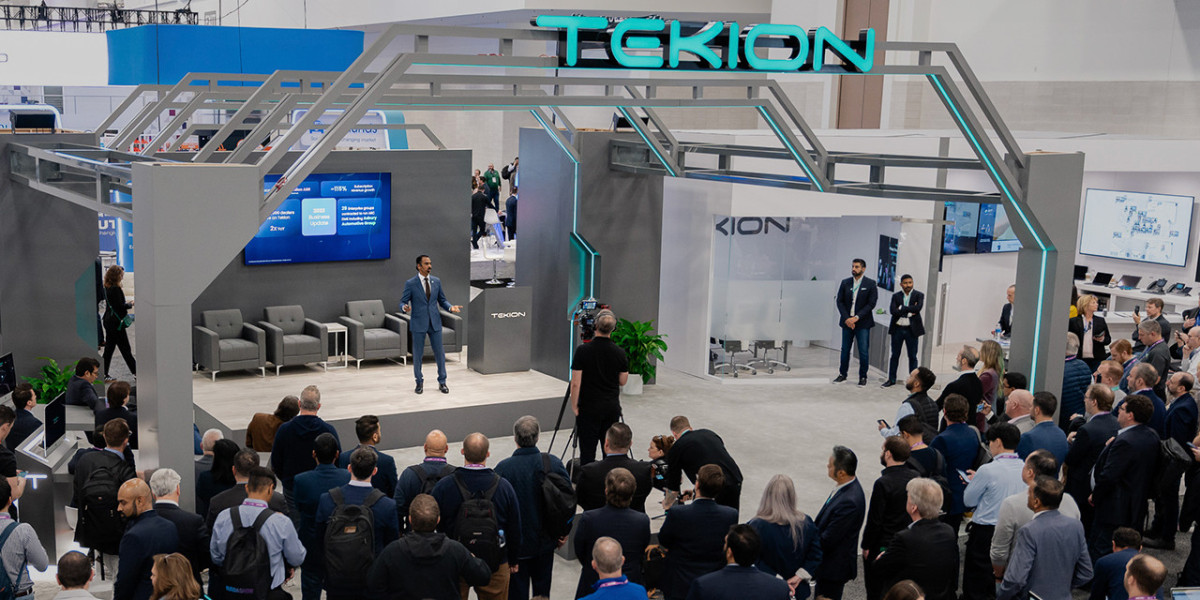

In today’s rapidly evolving automotive industry, technology is no longer an afterthought — it is central. From digital retail experiences to connected service systems, manufacturers, dealers, and consumers all expect seamless, data-driven interactions. It is in this context that Tekion has emerged as a formidable force: a cloud-native platform that seeks to unify and modernize automotive retail.
Founded in 2016 by former Tesla executive Jay Vijayan, Tekion sets out with the vision of replacing decades-old legacy systems with a next-generation, AI-infused architecture for dealers, OEMs (original equipment manufacturers), and customers. What sets it apart is its ambition: to deliver a single “AI Platform” that spans the full dealership lifecycle — from showroom to service bay, and from manufacturer to consumer.
This article explores Tekion’s offerings, its positioning in the market, its challenges, and its future trajectory.
Tekion’s Product Suite: One Platform, Many Capabilities
One of Tekion’s core contentions is that dealership operations, consumer journeys, and back-end systems should no longer be fractured across disjointed software stacks. Instead, Tekion offers a unified, AI-native platform. The Tekion website describes its product pillars as follows:
AI / Tekion AI — The intelligence layer that drives personalization, predictive insights, and data analytics.
DMS — The core dealer management system module, which handles inventory, sales, service, parts, finance and accounting operations.
CRM — Customer relationship management tools built into the platform to help dealers engage, retain, and upsell to customers.
Digital Retail — Enabling online vehicle browsing, digital sales, eSign, online payment, and delivery workflows.
Service Experience / Virtual-to-Visit Experiences — Improving the service appointment, repair, and parts ordering experience via both physical and virtual interactions.
Advanced Analytics — Dashboards, forecasting, machine learning-based insights that help dealers optimize margins, parts performance, and service throughput.
Open APIs & Integrations — Developer-friendly APIs and an integrations hub that allow third parties or bespoke systems to connect to Tekion’s ecosystem.
By combining these modules into one seamless environment, Tekion asserts that dealerships can avoid data silos, improve cross-department collaboration, and deliver more consistent customer experiences.
On the enterprise side (OEMs, large manufacturers), Tekion also offers Automotive Enterprise Cloud capabilities — digital brand experiences, configurators, digital shopping, and end-to-end consumer experiences, tailored for the scale and complexity of manufacturers. Meanwhile, Tekion’s Automotive Partner Cloud supports its partner ecosystem via open APIs and partner integrations.
Value Proposition and Performance Metrics
On its website, Tekion cites several metrics to illustrate the value dealers can expect:
Up to $9,000 monthly in machine learning–generated accessory upsells
Up to $36,000 monthly in service upsells
Up to $64,000 yearly in cost savings on paper and toner
Up to 180 hours of reduction in unapplied time per month
Up to a 23% reduction in aged accounts receivable
Up to 31% increase in Per Vehicle Retailed (PVR)
These figures, while aspirational, reflect how Tekion aims to deliver both top-line and bottom-line improvements by harnessing AI, process automation, and integrated workflows.
Tekion also highlights broader platform outcomes such as:
$43 b+ transacted through its platform
3 million+ vehicles sold
24 million+ vehicles serviced
225 million+ parts sold
95.6% forecast accuracy in sales
Market Positioning & Business Trajectory
Funding, Valuation, and Scale
Tekion has drawn significant investor interest. In July 2024, Tekion raised $200 million in growth equity from Dragoneer, pushing its valuation above $4 billion. Prior to that, it had already raised significant capital from investors like Index Ventures, BMW iVentures, Hyundai, and others Overall, Tekion has raised around $640 million to date.
By the end of 2023, the company reported annual run-rate revenue growth of 97% year-over-year, and it surpassed $100 million in revenue. The company employs nearly 3,000 people worldwide, with strong engineering presence in India (Bengaluru, Chennai). In 2024, Tekion announced it would expand its workforce, especially across AI, engineering, and product roles.
Jay Vijayan has articulated that the company’s goal is to be profitable by 2025, and he has emphasized that profitability is a higher priority than pursuing an IPO prematurely. He has also targeted $1 billion in annual recurring revenue (ARR) by 2027.
Geographic and Market Reach
While Tekion is headquartered in Pleasanton, California, with the bulk of its operations in the United States, it maintains strong presence in India (Bengaluru as APAC HQ, Chennai as regional center) and in Europe (UK, France). Tekion supports over 2,000 automotive retailers and OEMs, and works with 250+ technology partners in its ecosystem. It has onboarded more than 52 OEM brands onto its platform.
In terms of market ambition, the U.S. and Canada remain core markets, but Tekion is actively expanding in Europe and eyeing further global growth. The company has also been expanding its physical footprint — for example, in Bengaluru it leased a 240,000 sq ft office to accommodate growth plans.
Challenges, Critiques, and Realities of Adoption
No transformative platform is without challenges, and Tekion is no exception. The company’s ambitions are lofty, but its path to large-scale adoption has faced friction. Below are key challenges drawn from industry reporting and user feedback.
Workforce Reductions & Operational Strain
In August 2023, Tekion laid off about 10% of its workforce — approximately 300 employees, many from its India operations — citing macroeconomic pressures. The move momentarily rattled perceptions, though the company affirmed it remained committed to its core mission.
Integration & Legacy Lock-in Resistance
Switching from entrenched legacy systems in the automotive sector is inherently difficult. In December 2024, Tekion filed an antitrust lawsuit against competitor CDK Global, alleging that CDK withheld essential data — impeding dealers’ ability to migrate to new platforms. In early 2025, the saga heated up, with CDK suing Tekion over alleged cybersecurity violations. These legal battles spotlight how incumbent DMS providers may resist displacement, creating friction for Tekion’s market expansion.
Mixed User Reception & Implementation Hurdles
User feedback — especially from service advisors, parts managers, and dealership staff — presents a mixed picture. On forums such as Reddit, some voice frustration with performance issues, bugs, and system slowness. For example:
“We switched to Tekion a month ago … crashed for 2 hours 4 times already … forcing our controller to stay 3 hours after closing.”
“Billing of parts is very complicated … inventory control is a complete nightmare.”
“It’s a shiny platform that later you will regret.”
That said, other users counter that many issues stem from onboarding, data migration, or internet connectivity, and that the platform improves over time:
“The programmers actually listen to recommendations by dealers.”
“Overall it’s been a nice upgrade … by far the most user friendly software I have used.”
Such feedback underscores the fact that high expectations require careful implementation, training, and ongoing support.
Scaling and Complexity
Delivering real-time, cross-modular operations across sales, service, parts, finance, digital retail, and analytics is a massive technical undertaking. Ensuring stability, performance, data consistency, and API reliability at scale is nontrivial. As usage grows, Tekion must maintain system resilience, backward compatibility, and support for customization — all while rapid innovation continues.
Additionally, automakers and large enterprises often require bespoke adaptations, strict compliance, and integrations with legacy systems. Balancing configurability and standardization is a delicate act.
Strategic Outlook & Future Directions
Path to Profitability & IPO Decisions
One of Tekion’s stated priorities is achieving profitability by 2025 before seeking an IPO. This discipline can help the company build sustainable fundamentals and avoid depending too heavily on external capital. If Tekion can hit or approach its $1 billion ARR target by 2027, it may command strong valuation multiples in a public offering.
Deepening AI & Predictive Capabilities
Tekion’s identity as an “AI-native” platform is central to its differentiation. As data accumulates, the opportunity lies in more advanced predictive maintenance, parts forecasting, dynamic pricing, lead scoring, and personalization. Dealers that can leverage these insights effectively may see outsized gains in efficiency, margins, and customer loyalty.
Ecosystem Expansion & Partner Strategy
The automotive technology landscape is vast — insurers, financing firms, parts suppliers, mobility services, telematics providers, and IoT vendors are all relevant. Tekion’s open API model and partner cloud strategy are critical to building a vibrant ecosystem where third-party players plug in. The more plug-and-play integrations they support, the more buyers will view Tekion as a central hub, not just a DMS.
Geographic and Segment Growth
While Tekion’s stronghold is the U.S. and Canada, expansion into Europe, Asia, and emerging markets is a key growth vector. That said, in markets like India, cloud infrastructure costs and local data regulations pose nontrivial challenges. Moneycontrol Tekion will need to adapt its architecture, compliance posture, and go-to-market models to regional conditions.
Further, electric vehicles (EVs) and mobility services open fresh domains. Tekion already supports digital retail and configurators; doubling down on EV-centric workflows, subscription models, and connected services could be a powerful extension.
Legal & Competitive Battles
Tekion's legal disagreements with incumbents like CDK underscore a broader competitive challenge: legacy vendors will resist disruption. Tekion must both defend its right to compete and continue to offer compelling performance, pricing, and migration support to win over dealers. The outcome of ongoing lawsuits may affect industry dynamics and regulatory scrutiny on data portability, platform access, and competition.
Why “Tekion” Matters in the Automotive Future
The adoption of cloud-native, AI-infused platforms such as Tekion is a bellwether for the future of automotive retail. Legacy DMS systems often suffer from outdated architecture, fragmented modules, manual handoffs, and poor integration. Tekion promises a reimagined paradigm where:
Data is unified and real-time: No more siloed modules or manual exports — everything flows across operations seamlessly.
AI powers intelligent decisions: From predicting parts demand to recommending upsells to optimizing schedules, AI becomes an operational co-pilot.
Customer experiences are consistent and cross-channel: Whether browsing online, visiting a showroom, or getting service, the journey is coherent.
Dealers can scale efficiently: Smaller dealers can access enterprise-grade tools; larger groups can manage multi-rooftop complexities.
Innovation accelerates: With open APIs and continuous delivery, emerging features and integrations become easier to adopt.
If Tekion can combine its product promise with stable delivery, robust support, and adaptability to local markets, it could be one of the defining platforms of 21st-century automotive retail.
Tekion is an ambitious, highly modern bet on rethinking how automotive retail operates. Through a unified, AI-powered SaaS platform, it attempts to erase the fractures between sales, service, parts, OEMs, and customers. Its strong financial backing, scaling workforce, and bold goals underscore the seriousness of its mission.
Yet, the road ahead is demanding: scaling globally, satisfying demanding clients, defending its position against entrenched competitors, and continually refining the system in response to real-world feedback. The mixed reception from users highlights that vision alone is not enough — execution, support, and relentless iteration will determine whether Tekion becomes a legacy-busting success or a cautionary tale.